Bedding • Fabric Guide
Coyuchi Pillowcases: A Guide to Fabric Feel, Fit, and Care
A pillowcase is a small piece of bedding with an outsized role: it rests against your face for hours, gets washed often, and can change the way a bed feels night after night. Here’s what to know about fabric, construction, sizing, and laundry when evaluating Coyuchi pillowcases.
There’s a moment at bedtime when the day finally quiets down and your head meets the pillow. The fabric beneath your cheek may seem like a detail, but it can make a noticeable difference to the feel of that moment. A pillowcase that feels crisp and cool is a different experience from one that feels smooth and close-knit—or relaxed, textured, and softly rumpled.
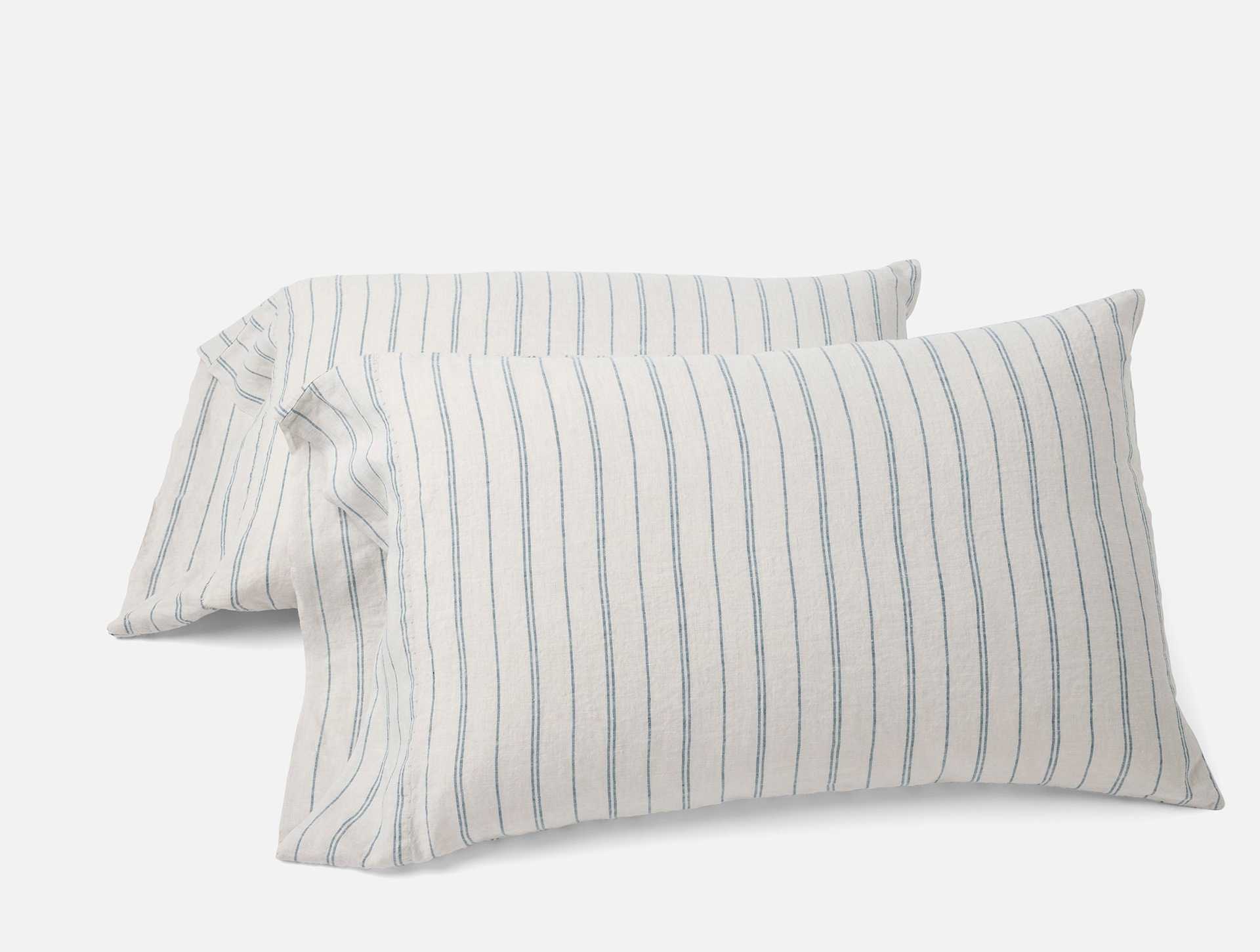
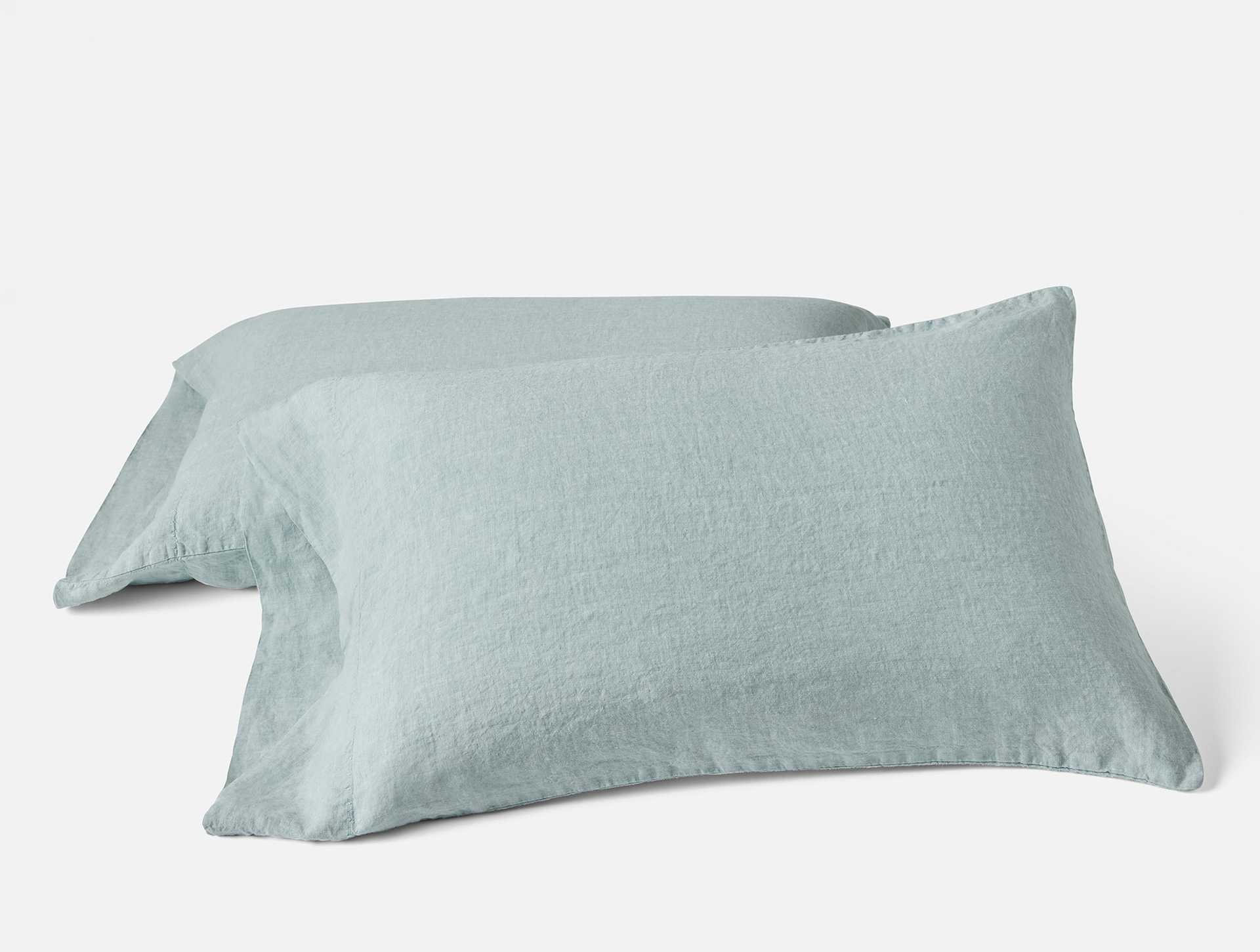
That’s why it helps to look beyond color and pattern when comparing pillowcases. Fiber, weave, finishing, fit, and care all influence how the fabric feels and how it behaves after repeated washing. Coyuchi’s Organic Relaxed Linen Pillowcases, for example, are described as made from organic flax grown in France and woven into linen in Portugal. Their listed details include pick-stitched cuffs, a plant-based softener finish, and care instructions for a cold, gentle wash and low-temperature tumble drying.
This guide is an informational look at those practical details—not a promise that any one material will feel perfect for every sleeper. Texture is personal, and pillow size, laundry habits, and climate matter too. Knowing what to check can help you decide whether a particular pillowcase fits your preferences and routine.
Start with the fiber: what linen brings to a pillowcase
Linen is made from flax fibers. Compared with the familiar smoothness of many cotton fabrics, linen often has a more pronounced natural texture. Individual fabrics vary, but a linen pillowcase may feel dry, airy, or slightly crisp at first, with small variations in the surface that are part of its character. Garment washing or other finishing can soften that first impression, while regular use and laundering may change the hand of the fabric over time.
Breathability is one reason people consider linen for bedding. Its open, airy feel can be appealing to sleepers who dislike a dense or clingy surface. Linen can also absorb moisture, though the experience depends on the fabric’s construction, the room, and the person using it. It is more accurate to think of linen as a fabric with useful moisture-handling and airflow characteristics than as a material that guarantees a particular temperature or sleeping result.
The Coyuchi pillowcase descriptions identify the material as 100% organic flax linen. They also describe the fabric as naturally breathable and temperature regulating. Those qualities may be attractive if you prefer a textured, less silky surface or want bedding that feels comfortable across changing temperatures. Still, personal comfort is subjective: a linen weave may feel wonderfully relaxed to one person and too textured to another.
It’s also useful to distinguish fiber from finish. “Linen” tells you the basic material, but not exactly how soft, smooth, heavy, or crisp a finished pillowcase will feel. Yarn, weave density, washing, dyeing, and any finishing treatments all contribute. If possible, consider fabric in person; if not, read the specific product description and care label rather than assuming every linen pillowcase feels identical.
Feel is more than a softness rating
Softness is often treated as the whole story, but a pillowcase can be comfortable in several different ways. A smooth sateen, for instance, may feel slicker against the skin than a textured linen. A crisp percale may feel cool and clean rather than immediately plush. Relaxed linen occupies another lane: it can feel textured and breathable, with a drape that softens as the fabric is used and cared for.
When assessing feel, ask yourself what you actually enjoy. Do you like a fresh, crisp bed, or do you prefer fabric that already feels lived-in? Are you sensitive to visible or tactile texture? Does your face tend to feel warm at night? These questions are more revealing than an abstract search for the “softest” pillowcase.
Product descriptions for Coyuchi’s Organic Relaxed Linen Pillowcases describe a relaxed feel that softens with use. One listed version is garment-washed, and another describes a plant-based softener finish. These details suggest an effort to give the linen a more relaxed hand, but they do not mean that every person will experience it as smooth or silky. Linen retains its particular character, and the weave remains part of the tactile experience.
If you are moving from cotton to linen, expect a difference rather than an exact substitute. The first few nights can be a useful test. Notice whether you like the texture, whether the fabric feels comfortable against your cheek, and whether it remains pleasant after laundering. A pillowcase is used so directly and so frequently that your own comfort is the most useful measure.
Weave, finishing, and the details that matter
Weave describes how yarns cross to form fabric. It affects appearance, surface texture, drape, and, together with fiber and yarn, the way a textile feels. Product listings do not always provide a detailed weave specification, so avoid inferring one from words such as “relaxed” or “breathable.” When a weave is not stated, it is reasonable to focus on the information that is available: fiber content, origin, finishing, construction, and care.
Finishing can influence the fabric’s feel before it reaches your bed. A garment-washed or stone-washed fabric may feel less rigid than an untreated one. A softener finish can also alter the hand. These descriptions are useful clues, not guarantees: the final feel depends on the full fabric and finishing process, and it can evolve with washing.
Construction details deserve a look, too. Coyuchi’s listed pillowcases include pick-stitched cuffs. This small line of stitching adds a finished edge and can be a subtle visual detail when the pillow is turned down or arranged on a bed. It is not a measure of overall softness, but it gives useful information about the design and how the opening is finished.
The product descriptions also identify GOTS certification for the organic linen. Certification claims should be read in context and checked against the product’s current label or documentation, especially if a specific standard is important to you. A certification can provide information about the scope of assessment it covers; it does not, by itself, tell you whether a fabric will suit your preferred feel or laundry method.
Pillowcase sizing: measure the pillow, not just the label
A comfortable pillowcase begins with a sensible fit. A case that is too small may strain at the seams or compress a lofty pillow. One that is too large can look loose and allow the pillow to shift inside. Labels such as Standard, Queen, and King offer a starting point, but actual pillow dimensions vary, and pillow thickness affects the fit as much as length and width.
Before choosing a size, measure the pillow from seam to seam while it is lying flat. Check both its length and width, then look at the pillowcase’s stated dimensions and size guidance. If the pillow is unusually thick, oversized, or especially firm, allow for that bulk when comparing measurements. A case with enough room to enclose the pillow without pulling tightly is generally easier to put on and less likely to stress the closure or seams.
Do not assume a pillowcase size from the bed size alone. A queen bed can hold different pillow arrangements, and pillows sold as “queen” may not be identical across manufacturers. Check the product’s current sizing information before ordering. The available Coyuchi product details supplied here identify the pillowcases as a set of two but do not give exact case dimensions, so the product’s current listing or label is the right place to confirm measurements and available sizes.
Also consider the opening. Pillowcases may use an envelope closure, a flap, or an open end. The closure affects how the pillow is inserted and how neatly the case stays in place, but construction can vary by style. Review the specific item details rather than assuming a feature based on the brand or fabric alone.
Care that helps preserve the fabric
Pillowcases are among the bedding pieces most likely to need frequent washing. They collect natural skin oils, hair products, perspiration, and everyday dust. The goal is not to turn laundry into a complicated ritual; it is to clean the fabric regularly without adding avoidable wear.
For the Coyuchi Organic Relaxed Linen Pillowcases described in the available product information, the listed routine is machine washing in cold water on a gentle cycle, followed by tumble drying on low. Some descriptions also advise washing with like colors, removing the pillowcases promptly, and using a warm iron if desired. Always follow the care label attached to the particular set you own, since instructions can differ between products and finishes.
- Wash with similar colors. This reduces the chance of color transfer, especially when laundering new or dark textiles.
- Choose a gentle cycle and avoid overloading. Fabric needs room to move through the wash and rinse properly.
- Use detergent sparingly. More detergent is not always better; residue can remain in fabric if it does not rinse away fully.
- Keep drying temperatures modest. Low heat is the listed guidance for these pillowcases. Remove them promptly to limit unnecessary creasing.
- Skip harsh treatment unless the label permits it. Bleach, fabric softener, or strong stain products may affect color or finish. Check the care instructions before using them.
Linen is often associated with a relaxed, naturally rumpled appearance, so ironing is a matter of preference rather than a requirement for a neat bed. If you prefer a smoother cuff, the listed care details permit warm ironing for some versions. Use the garment’s label as your final guide and avoid applying more heat than it recommends.
For a stain, treat it promptly and gently. Blot rather than rub, and test any stain treatment on an inconspicuous area if the care label allows it. Aggressive scrubbing can roughen fibers, while high heat may set some stains. When in doubt, choose the gentlest method consistent with the fabric instructions.
How linen pillowcases change with use
Natural fibers rarely stay exactly as they felt on day one. Repeated washing and drying can soften a fabric, and the Coyuchi descriptions specifically note that the relaxed linen softens with use. That gradual change is part of the appeal for people who like bedding that develops a less formal, more familiar feel.
At the same time, softening is not a license to ignore care directions. Too much heat, crowded loads, harsh chemicals, or frequent overdrying can add stress to textile fibers. Following the label and allowing items enough room in the washer and dryer are simple ways to support their useful life. If a pillowcase begins to show unusual thinning, loose seams, or persistent distortion, review the care routine and stop using treatments that may be contributing to wear.
Color can also evolve depending on dye, sunlight, detergent, and washing conditions. Turn pillowcases inside out before washing if the label permits and you want to reduce abrasion to the visible surface. Keep them away from prolonged direct sunlight during storage or drying if color retention is a concern.
Is relaxed linen the right match for your sleep routine?
Think about your preferences rather than chasing a universal definition of luxury. Relaxed linen may suit you if you enjoy visible texture, appreciate a fabric that feels airy, and are comfortable with a naturally casual appearance. It may be less appealing if you want an especially slick surface, a perfectly pressed look, or a fabric that feels uniformly smooth from the first use.
Your laundry habits matter as much as your style preferences. A pillowcase that calls for a cold gentle cycle and low tumble drying may fit easily into a routine built around careful laundering. If your household washes everything on high heat or relies on strong stain treatments, it is worth considering whether you are willing to adjust those habits to follow the care label.
For households with skin sensitivities, fabric choice is individual. A natural fiber or an organic certification should not be taken as a guarantee that a pillowcase will prevent irritation or allergies. Detergent, finishing agents, dust, and personal sensitivities can all play a role. If you are trying a new textile because of a skin concern, wash it before use according to its care label and seek professional medical advice for persistent symptoms.
A practical checklist before choosing
When comparing Coyuchi pillowcases—or any pillowcase—use this short checklist to turn a pretty product description into a practical decision:
- Fiber: Is the case linen, cotton, or a blend? Does the stated material suit the texture you enjoy?
- Feel: Is the fabric described as crisp, smooth, garment-washed, relaxed, or textured? Which of those qualities sounds comfortable to you?
- Construction: Look for details such as cuff stitching, closure type, and set contents.
- Fit: Compare the case dimensions with your pillow’s measurements and thickness. Confirm the available size on the current product listing.
- Care: Make sure the washing and drying instructions work with your usual laundry routine.
- Certification: If a certification matters to you, check the exact product information and what the certification covers.
- Personal preference: Consider whether you like a relaxed, naturally textured surface or prefer a smoother, more polished feel.
The takeaway
Pillowcases are practical objects, but they’re also part of the nightly ritual: the fabric you feel as you settle in, the detail that gives a bed its character, and the textile that returns to the washing machine again and again. Understanding fiber, finish, fit, and care makes it easier to choose with confidence—and to keep the fabric feeling the way you like it.
Coyuchi’s Organic Relaxed Linen Pillowcases are described as organic flax linen, woven in Portugal, finished with a plant-based softener, and detailed with pick-stitched cuffs. The provided care information points to a cold, gentle wash and low tumble drying, while the stated feel is relaxed and likely to soften with use. Those details offer a useful starting point, but your own comfort and the exact care label should have the final word.
If the balance of linen texture, breathable character, and straightforward care sounds right for your bed, review the current dimensions, color, set contents, and instructions for the specific version before choosing. Small details matter most when they meet the needs of the person who sleeps on them.
For product-specific details, see the Coyuchi Organic Relaxed Linen Pillowcases listing.